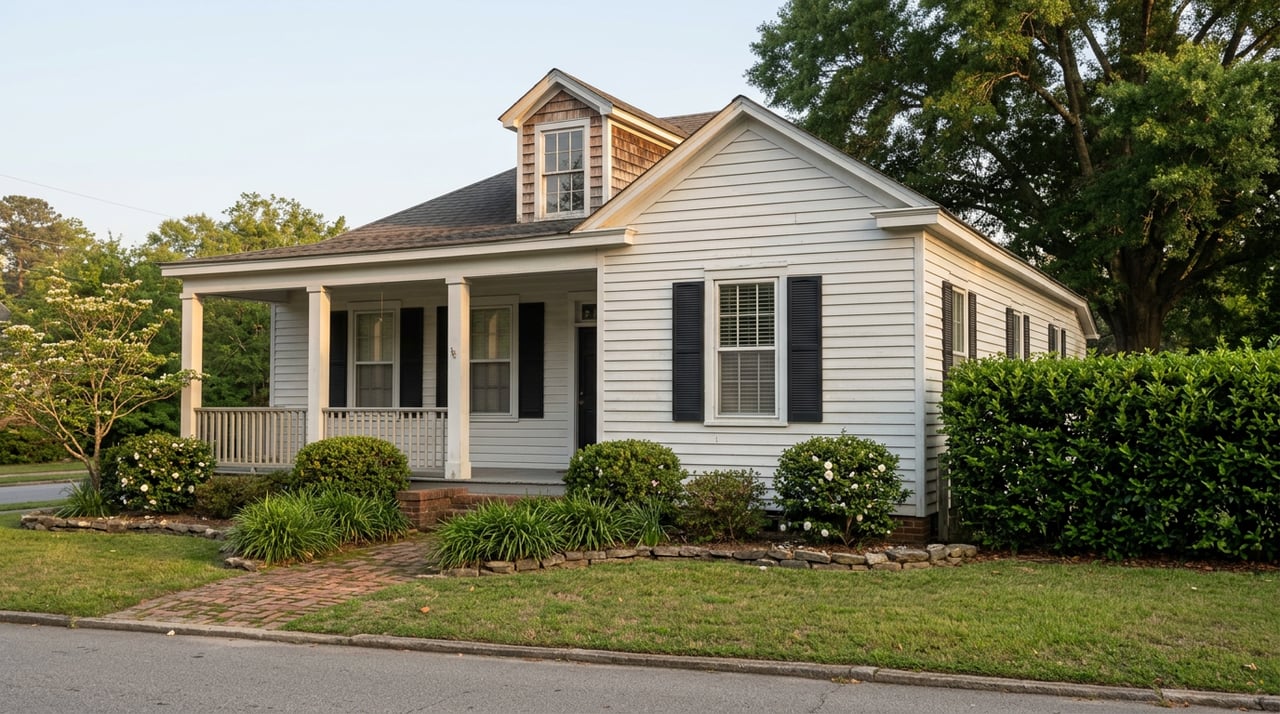
What Actually Keeps Oxford Running: The Road Rally, the Bike Show, and a Museum Most Visitors Miss
August 20, 2026
August 20, 2026
I picked up a bag of oolong at Doehrn Tea Co. on Jacks Point Road last week and noticed a hand-lettered notice taped to the register asking for volunteers. Not for the ferry, not for the regatta committee, not for anything with a marina attached. It was for the Oxford Community Center's Road Rally, the one that sends a string of vintage and exotic cars rattling out of town every September. That small paper sign is the whole story of how Oxford actually operates. The town's public face runs on sailboats and sunset views. Its public life runs on volunteer fundraisers that never make it onto a visitor guide.
That distinction matters if you already live here, because it changes where you look for the texture of the place. The marina bars and dock restaurants are real, but they are Oxford's export product, built for people passing through by boat or by ferry. The Road Rally, the Community Garden's bicycle show, and the museum on Mill Street are the import side. They are what the town spends on itself.
Oxford's tourism economy is easy to describe because it photographs well: the Oxford-Bellevue Ferry crossing the Tred Avon, a raw bar at sunset, a regatta of one-design sailboats. What doesn't photograph as easily is the mechanism that funds the town's civic programs, and it isn't ticket revenue from any of that. It's a rotating slate of small, member-run fundraisers, each one tied to a specific local nonprofit, each one recurring on its own calendar rather than the tourist season's calendar.
The clearest example is the Road Rally. It's organized by the Oxford Community Center, sends roughly 80 vintage, classic, and special-interest cars out of town after a breakfast, and routes them over 60 to 80 miles of back roads before ending in a luncheon and car show at a destination venue. Anyone can stand along Morris Street and watch the cars leave. The money isn't in the spectacle. It's in the entry fees and sponsorships that go straight to the Community Center's own program budget.
That distinction, spectacle versus funding source, is worth sitting with, because it explains why the event has stuck around long enough to become an annual fixture rather than a one-off. The Road Rally exists specifically to raise money for the Oxford Community Center's educational, social, cultural, and recreational programs, the same organization that runs the OCC's classic cinema club, its speaker series, and its Stage @ OCC concert bookings throughout the rest of the year. The car show is the fundraising mechanism. The lecture series and film nights are what the fundraising mechanism pays for.
The Center doesn't limit its car culture to one weekend, either. On the first Saturday of the month, from April through November, owners park a rotating lineup of vehicles in front of the Community Center from 9:30 to 10:30 in the morning and talk with whoever wanders over. It's unadvertised in the sense that no one is buying a ticket. It's also the more honest version of what the Road Rally formalizes once a year: a small, recurring, no-pressure gathering that exists because enough residents decided it should.
The same funding pattern shows up a few blocks over, at the Oxford Community Garden. On September 12, from 11:00 a.m. to 2:30 p.m., the garden holds a Vintage Bicycle Show as its own fundraiser, a smaller, quieter cousin to the Road Rally with the same basic logic: a hobby-driven public gathering that exists to keep a specific piece of town infrastructure funded.
| Event | Timing | Benefits |
|---|---|---|
| OCC Road Rally | Annually each September | Oxford Community Center's educational, cultural, and recreational programs |
| First Saturday car display | 9:30-10:30 a.m., April through November | No fundraising component, informal community gathering |
| Vintage Bicycle Show | September 12, 11:00 a.m.-2:30 p.m. | Oxford Community Garden |
None of these three events depend on ferry traffic or marina bookings. They depend on residents showing up for something small and specific, which is a different kind of local economy than the one visible from the water.
A short walk from the harbor, at 101 Mill Street, the same pattern shows up again in a different form. The Water's Edge Museum tells the history of African American families on Maryland's Eastern Shore through art, literature, and historical interpretation, with exhibits on watermen, artisans, military figures, and spiritual leaders from one of the country's oldest free Black communities. Oxford remains the only UNESCO-documented Middle Passage stop on the Eastern Shore of Maryland, Delaware, and Virginia, a fact the museum was built specifically to hold and interpret since there is no town sign marking it.
The museum focuses on education and empowerment, inviting visitors to understand how these histories continue to shape the present.
It's easy to walk past 101 Mill Street without registering what's inside, because nothing about the building's exterior competes with the harbor view a few blocks away. But the museum, like the Road Rally and the bicycle show, is part of the same infrastructure: a small institution that exists because residents built it and maintain it, not because a tour bus schedule requires it.
The fourth piece of this pattern sits outside of town, on Route 333 near Boone Creek Road. Conservation Park covers 86 acres of wetland, with walking and biking trails, viewing areas, and open landscape that draws almost none of the photography that the harbor gets. It functions as the town's quiet counterweight to its waterfront identity. Where the harbor is built for visitors passing through, the park is built for residents circling back to it on an ordinary Tuesday.
Put those four things next to each other, the Road Rally, the bicycle show, the museum, the park, and a pattern holds. Oxford's visible economy runs on people arriving by boat or ferry for an afternoon. Its actual civic life runs on a smaller, steadier set of institutions that residents fund and maintain themselves, mostly invisible to anyone who only sees the town from a dock. The tea shop sign was a fair summary. Nobody photographs the volunteer sign-up sheet, but it's the thing keeping the lights on at the places that make Oxford feel like a town rather than a stop.
Living here means noticing which version you're actually experiencing on a given afternoon: the postcard, or the program it's quietly funding.
If you already call Oxford home and you're thinking through a move within it, or a piece of waterfront, farmland, or in-town property somewhere else on the Eastern Shore, Shawn and Meagan Moore bring the same local read to real estate that this town's residents bring to everything else here. Let's Find Your Perfect Home Together.
Stay up to date on the latest real estate trends.
We would love the opportunity to meet with you, discuss the value of your property, and assist you with your next real estate needs! We are looking forward to hearing from you and would love to schedule a time to meet very soon!
GET IN TOUCH WITH OUR TEAM TO LEARN MORE

SHAWN & MEAGAN MOORE
S:(410) 829-6466
[email protected]
M:(410) 200-4462
[email protected]
127 N WASHINGTON ST EASTON, MD 21601